

How To Deep Clean Wood Laminate Floors
Laminate flooring is an excellent budget-pick replacement for hardwood. Similar to hardwood, laminate can be somewhat tricky to clean. However, by knowing how to clean laminate floors the right way, you can enjoy your hardwood-dupe for years to come.
- How to Clean Laminate Floors
- Things to Avoid When Cleaning Laminate Floors
- What Is Laminate Flooring?
- Advantages of Laminate Flooring
- How to Clean Laminate Floors — FAQs
- The Takeaway
How to Clean Laminate Floors
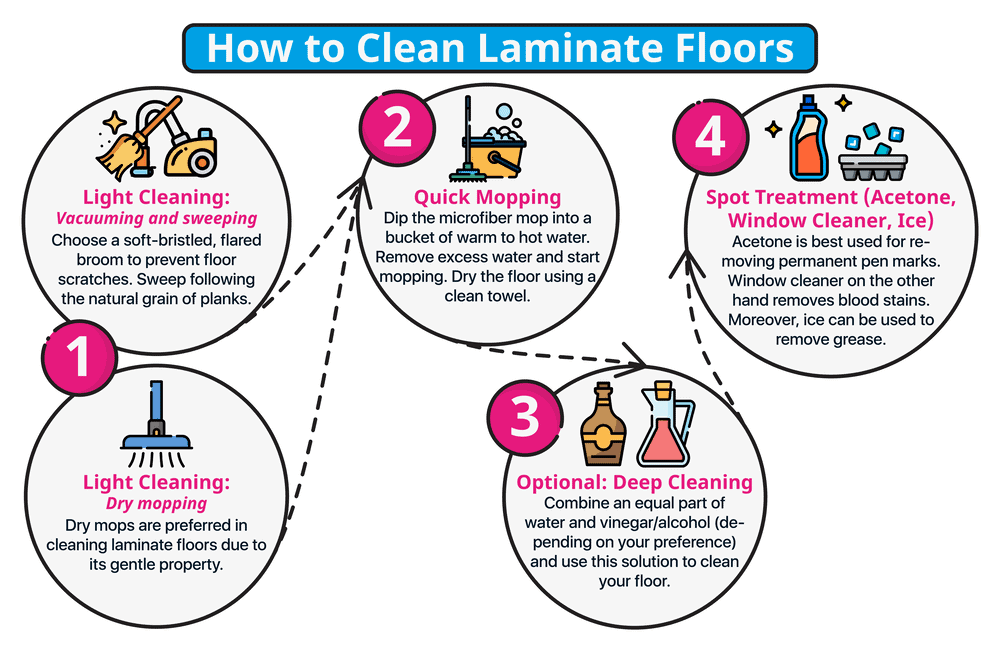
Cleaning and maintaining laminate floors is easy when you know the right approach. There are many cleaning methods you can use to suit your lifestyle and the level of cleaning required.
Things to Avoid When Cleaning Laminate Floors
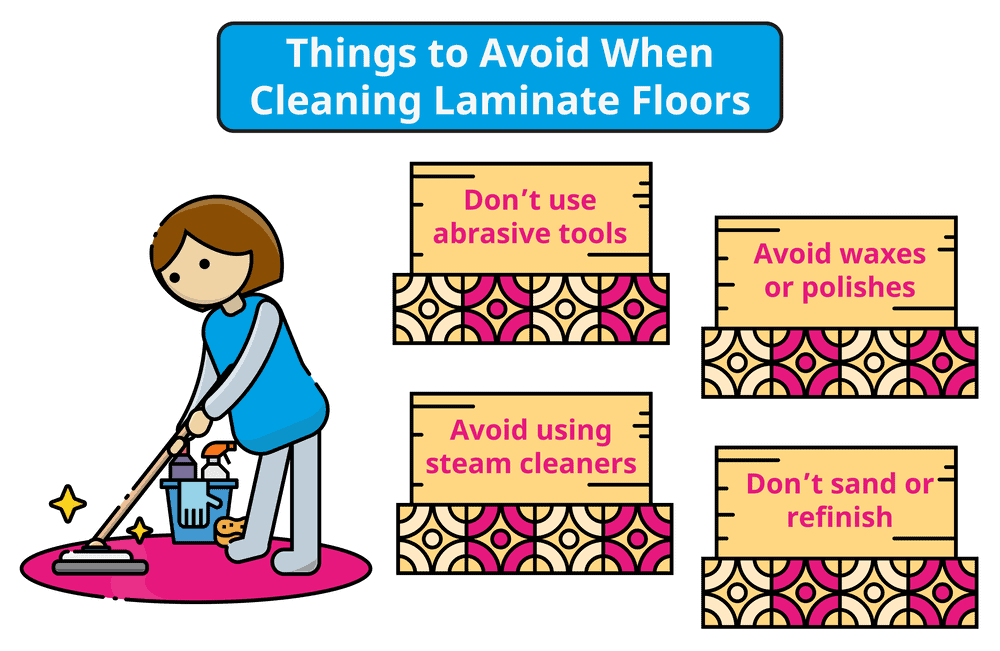
Cleaning laminate floors is easy as long as you use the right techniques and tools. You can get rid of stubborn stains and spots without using harsh chemicals. Here are a few things you should avoid:
- Don't use abrasive tools: Tools such as steel wool or stiff brushes should never be used on laminate floors. These will cause scratches and can damage the protective layer.
- Avoid waxes or polishes: Using polishes or waxes on laminate floors can make them slippery and create a filmy residue. It can also dull the finish and attract dirt and dust. Instead, use vinegar or rubbing alcohol to restore shine to the surface.
- Never use ammonia: Ammonia might be an effective stain remover, but it should be kept far away from your laminate floors. The strong chemical can strip the top coating from the planks over time (4).
- Steam is a no-no: Avoid using steam cleaners — even mops — on laminate floors. These tools use high temperatures to blast dirt and bacteria away. However, the steam is jetted into the surface to bring out all embedded dirt. While this works great on grout, laminate is another story. The moisture from the steam might make its way into the seam and can damage the planks from within.
- Don't sand or refinish: Keep in mind that laminate might look like hardwood, but it's very different. While you might sand hardwood floors to refinish it or restore the surface, this can't be done on laminate. If you try to sand it, you will remove the top layer and create scratches that can't be fixed.
- Use doormats and rugs: To avoid scuff marks and wear, place a few throw rugs or doormats to protect the floor. Doormats will also help to keep dirt outside and even work as a friendly reminder for guests to remove their shoes.
- Trim pet nails: Although laminate doesn't scratch as easily as hardwood, it can still happen. If you have an eager pup running around, make sure their nails are trimmed to avoid scratches.
What Is Laminate Flooring?
Laminate is often confused with vinyl. However, the two only share one similarity: water-resistance.
Laminate is a type of hybrid flooring. It was once only rarely used and was previously seen as cheap flooring. Nowadays though, laminate can be quite the staple piece in a home.
If you often confuse laminate flooring with wooden floors, you're not entirely off. Laminate is, in fact, made up of fine particles of wood that are tightly pressed into planks (5).
But laminate only looks like wood because it has been printed to look that way. Some manufacturers will also make stone laminate flooring, which is also made of wooden particles but looks like natural stone. Here are a few laminate floor basics that are helpful to know:
1. Material
Laminate is made up of layers of aggregated wood particles fitted with an image on top. Over the image, the planks are covered with a wear layer.
This layer is crucial and is what makes laminate so durable. The protective layer is a thin, clear sheet of aluminum oxide. It protects the sensitive parts from moisture, scratches and even UV rays.
2. Subfloor
Laminate planks require good underlayment and subfloor. The most commonly used with laminate is a foam that sits between the floor and the planks. This also helps to make the floor softer to walk and stand on, unlike tiles that often leave your feet sore.
The subfloor has to be adequate for the laminate planks to install easily and stay that way. If it's not satisfactory, you might need to install a thin underlayment of plywood before the foam and laminate.
3. Installation and Joining of the Planks
Laminate floors are also referred to as "floating floors." This is because you don't attach or adhere the planks to the subfloor or underlayment; rather, they "float" on top.
The planks or boards are connected to each other, commonly using a fold and lock style. This style keeps the boards locked hard in place.
Because the installation of laminate flooring is so simple, it's a popular choice for do-it-yourselfers.
4. Price
When you compare laminate floors to hardwood, they're inexpensive. However, compared to other types of floors, such as vinyl, laminate is a more high-end and pricier choice.
5. Maintenance
Laminate flooring is also somewhat easy to clean, especially compared to hardwood. It's resistant to water but isn't entirely waterproof. This depends on how close the seams are and how tightly they're installed.
However, relative to vinyl floors, laminate is more fragile. Vinyl can easily take a good mopping and various cleaners — mild detergents work wonders on vinyl.
Laminate, on the other hand, should only be cleaned with specialized cleaners that are marked safe. Waxing isn't necessary for laminate floors, unlike certain types of hardwood. Spills or any liquids should be cleaned immediately, similarly to hardwood floors.
If water makes its way underneath the protective layer or between the seams, it can cause the planks to swell. This is due to the fine wood particles that increase in size when exposed to water.
Advantages of Laminate Flooring
Although laminate flooring has many advantages, it's essential to also compare it to what you're trying to replicate — hardwood. Here are a few benefits of laminate flooring that are worth considering:
How to Clean Laminate Floors — FAQs
The Takeaway
Maintaining and cleaning laminate floors is easy using the right methods. The wood-like surface doesn't require any use of chemicals or harsh cleaning tools. A simple solution of vinegar and water can do the trick — even warm water is sufficient.
Avoid using a wet mop as the water can seep into the seams and ruin the planks. Instead, wring the mop as thoroughly as you can — or spray a microfiber pad and mop the floor gently.
How To Deep Clean Wood Laminate Floors
Source: https://ohsospotless.com/how-to-clean-laminate-floors/
Posted by: randallsilloon1996.blogspot.com
0 Response to "How To Deep Clean Wood Laminate Floors"
Post a Comment